
Neanderthal gene variant linked to lower schizophrenia risk, study finds
Published on 17 November 2026 - 11:43 GMT+1•Updated 11:47 A gene mutation inherited from Neanderthals...
Published on 17 November 2026 - 11:43 GMT+1•Updated 11:47
A gene mutation inherited from Neanderthals may reduce the risk of schizophrenia by almost 10%, a new study has found.
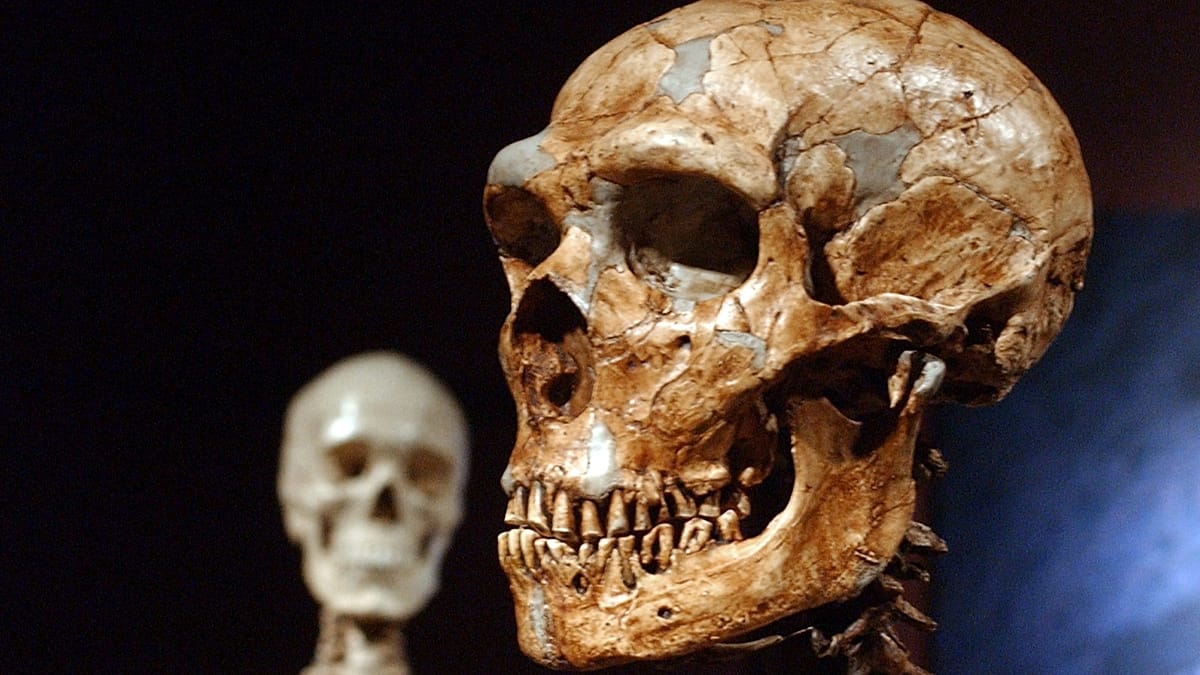
Neanderthals were close evolutionary cousins of modern humans, but they went extinct about 40,000 years ago. Due to interbreeding between species, modern people outside of Africa have up to 1% to 4% Neanderthal DNA, while sub-Saharan Africans are thought to have far less Neanderthal DNA.
The study found that Neanderthals passed on a common genetic variant affecting the occipital lobe, which is found at the back of the brain. The occipital lobe is home to the brain’s visual cortex and plays a role in vision, mental imagery and reading.
Neanderthals are thought to have had larger occipital lobes than modern humans. Yet modern people with the genetic variant have smaller occipital lobes — a reduction of about 0.85 cubic centimeters per copy, according to the study, which was published in the Proceedings of the National Academy of Sciences.
The variant lies near DAAM1, a protein-coding gene involved in brain development.
In people with two copies of the gene variant, it is also linked to a nearly 10% lower risk of schizophrenia, but the variant does not seem to affect intelligence or other major psychiatric disorders.
“This Neandertal-derived variant is linked to altered brain anatomy in present-day humans and lower schizophrenia risk while having little or no association with general cognitive ability,” wrote study authors and evolutionary geneticists Hugo Zeberg and Svante Pääbo
“These findings caution against equating the size of a brain region with cognitive abilities,” they added.
Zeberg, of the Karolinska Institutet in Sweden, and Pääbo, a 2022 Nobel Prize winner from the Max Planck Institute for Evolutionary Anthropology in Germany, have worked together for years to identify how Neanderthal genes affect human health today.
They previously found that a major Neanderthal-inherited gene cluster on chromosome 3 raises the risk of severe COVID-19. Subsequent research found the same variant protects against HIV.
In 2021,another research teamfound that Neanderthal ancestry may alter the gene pool in a way that affects schizophrenia risk.
But according to Zeberg and Pääbo, any “protective effect” appears specific to the recently identified gene variant.