

Is Hantavirus a threat to Europe? Climate change and habitat destruction are increasing the risk
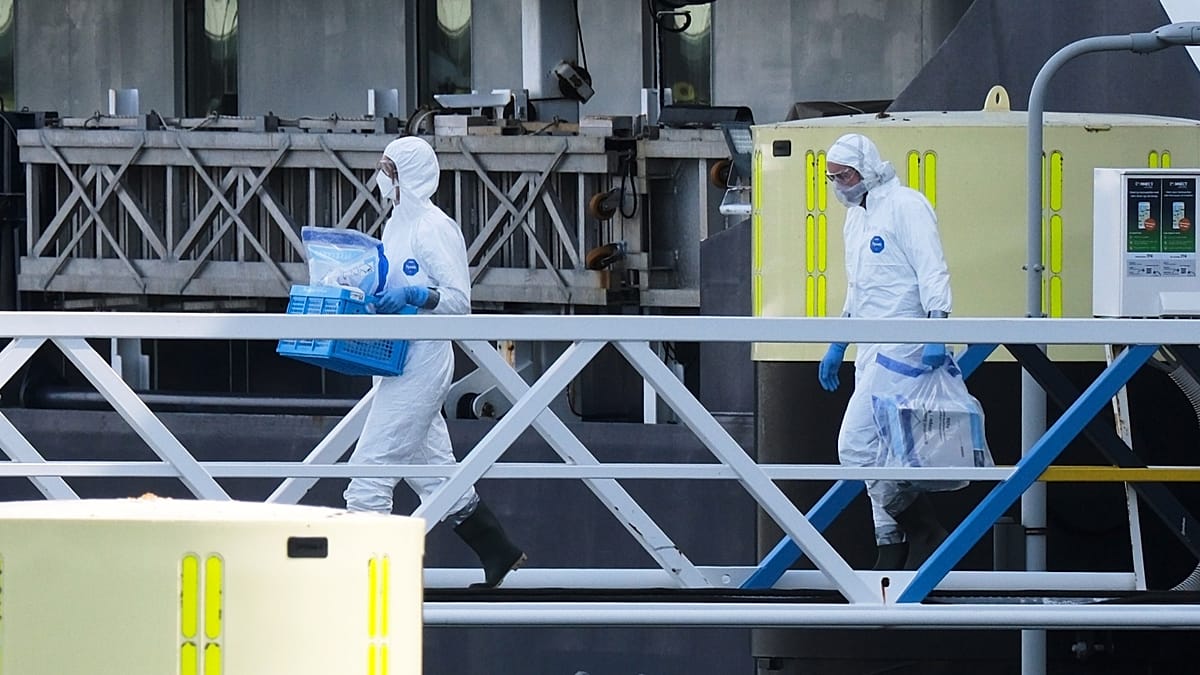
Fears of another global pandemic erupted this month after the MV Hondius cruise ship became the centre of a deadly hantavirus outbreak. The latest World Health Organization (WHO) Disease Outbreak News report...
Fears of another global pandemic erupted this month after the MV Hondius cruise ship became the centre of a deadly hantavirus outbreak.
The latest World Health Organization (WHO) Disease Outbreak News report states that as of 13 May, a total of 11 cases, including three deaths, have been reported.
More cases are expected to arise given the dynamics of spread on a ship and the virus’ incubation period. However, the WHO confirms that there are no signs of a “larger outbreak” at the current time.
What is hantavirus and how does it spread?
Headlines of self-isolating passengers and images of ambulance workers dressed in PPE have triggered comparisons to the COVID pandemic. It’s a worry the WHO has repeatedly shut down, citing the varying nature of how the two diseases are transmitted.
“This is not coronavirus,” said Maria van Kerkhove, director of epidemic and pandemic preparedness at the WHO, following news of the first passenger fatality. “I want to be unequivocal here. This is not SARS-CoV-2 and not the start of a COVID pandemic.”
Hantaviruses, which are named after a river in South Korea, describe a family of viruses rather than a single disease. There are more than 20 different hantaviruses, almost all of which are linked to infection by rodents such as rats and mice.
While most hantaviruses cannot be passed from person to person, rare instances of human transmission have been documented with the Andes virus strain, which is the particular strain behind the cruise ship outbreak.
However, transmission still only occurs through close contact. In 2018, for example, there was an Argentinian outbreak of the virus that was traced back to a party. A single person with the virus is thought to have spread it to 34 people, with 11 deaths.
Is climate change to blame for the hantavirus outbreak?
Climate change and infectious diseases have long been linked by scientists.
The climate is an important factor for the distribution and spread of organisms, including disease hosts (animals that can harbour or transmit diseases), vectors (arthropod animals like mosquitoes and ticks that transmit diseases) and pathogens (the microorganisms that cause the disease itself, such as viruses or bacteria).
According to a 2022 study published in the science journal Nature, more than half of all human infectious diseases are climate sensitive, including hantaviruses.
“Whenever a disease is climate sensitive, there is the potential for climate change to be influencing its epidemiology, including its distribution and impacts on people,” Kris Murray, a professor at Medical Research Council Unit The Gambia at the London School of Hygiene & Tropical Medicine, tells Euronews Earth.
“In the case of hantavirus, climate characteristics and climate change may directly influence the presence or abundance of hantavirus host species, such as numerous rodent species.”
A change in rainfall patterns, for example, can influence the reproductive timing and success of rodent host species. Murray warns that this can have “downstream impacts” on human exposure.
Habitat destruction can fuel zoonotic disease outbreaks
Habitat loss, destruction or degradation – often caused by human-caused deforestation – can both directly and indirectly influence disease transmission.
“In areas where zoonotic hosts occur, removal of vegetation or other destructive activities can mobilise infectious pathogens,” Murray explains.
“Hantavirus for instance is often caused by people disturbing areas where rodents (the natural reservoir host group of hantaviruses) occur, since hantavirus is shed in their droppings and urine, which can persist in the environment for some time.”
When these environments are disturbed, the pathogen can be aerosolized, meaning people in the vicinity who breathe it in may become infected.
“Fragmented ecosystems often favour adaptable reservoir species such as rodents, bats or ticks, while reducing the natural ecological balances that help regulate pathogen transmissions,” Professor Jörg Schelling, former Director of the Institute of General Medicine at the University Hospital of LMU Munich, tells Euronews Earth.
The WHO is currently working on the hypothesis that transmissions occurred before passengers boarded. Since July last year, Argentina has recorded 101 hantavirus cases, with 32 deaths. This is significantly higher than 2024-2025, when 64 cases and 14 deaths were reported.
Experts have warned that the increase follows the significant drought that hit Argentina in 2023 and 2024, which was then followed by increased rainfall in the subsequent years. This means more vegetation cover and more food for hantavirus hosts such as rats.
Is hantavirus a threat to Europe?
Hantavirus existed in Europe long before it dominated headlines at the beginning of this month, with the first documented outbreak occurring in Sweden in 1934.
A 2009 study published in the National Library of Medicine says that elevated temperatures in West-Central Europe have been associated with more frequent Puumala hantavirus outbreaks through high seed production and high bank vole densities.
On the other hand, warm winters in Scandinavia have led to a decline in vole populations as a result of the missing protective snow cover.
Puumala is the most common cause of hantavirus infections in Europe and can spread to people through the inhalation of airborne dust contaminated by the urine, droppings or saliva of infected bank voles. It causes a mild form of hemorrhagic fever with renal syndrome, with symptoms spanning from sudden fever and headaches to back and abdominal pain.
However, it is rarely fatal, and cannot be spread from human to human.
“Hantaviruses do occur globally, including in Europe, and it’s conceivable that climate change could create new or increasing opportunities for spillover into people but more work is required to understand the risks at the individual host species level,” Murray explains.
“Importantly for hantaviruses, while they do cause occasional illness in people across the world, they do not generally exhibit strong human-human transmission, and it’s really this that differentiates rare sporadic and usually fairly isolated cases from larger clusters of infected people as we’re seeing in the current outbreak.”
Schelling argues that climate projections suggest that parts of Northern and Western Europe in particular may become “increasingly suitable” for rodent species that act as hantavirus reservoirs.
“Regions that historically experienced colder climates – including parts of Scandinavia, the Baltic region, and higher-altitude areas in Central Europe – may see longer transmission seasons and changing patterns of rodent abundance as temperatures rise,” he says.
Schelling adds that while uncertainty remains regarding the exact geographic shifts of hantavirus, Europe’s zoonotic disease landscape is likely to change “substantially” over the coming decades.
What can Europe do to tackle hantavirus?
Following the hantavirus outbreak, experts are calling on policymakers to strengthen surveillance systems that combine epidemiological, ecological and climate data.
“This includes monitoring variables such as temperature, precipitation, vegetation indices, land-use change and biodiversity indicators alongside human disease surveillance,” Schelling says.
“At a national level, some countries already use climate-informed forecasting for vector-borne diseases such as Dengue, Chikungunya, West Nile virus or TBE (tick-borne encephalitis), which can serve as models for broader surveillance.”
Schelling argues that public health systems across Europe still need more investment in climate-resilient infrastructure, pointing out that the prevention of future outbreaks depends not just on better surveillance, but on addressing the root causes of ecological disruption and climate change itself.
The International Union for Conservation of Nature (IUCN) says the recent outbreak of hantavirus has revealed an “unexpected solution”: restoring nature.
A 2021 study published in Science Direct found that restoring tropical forest landscapes could reduce populations of two major reservoir rodent species, lowering transmission risk for nearly 2.8 million people living in vulnerable regions.
“Restoration should be recognised as a public health intervention,” says Paula Prist of IUCN. “While its role in mitigating climate change and restoring biodiversity is well established, it is also a vital strategy for protecting human health.”
Moving forward, Murray says further research is required to better understand outbreak risk, particularly for “emerging infections that are either newly appearing in the human population or doing things that seem different to usual”.